On Architecture
Architectural Salvage: How to Repurpose Vintage Building Elements
The demolition of an old building is, among other things, a dispersal event. When a nineteenth-century barn comes down in rural Indiana or a Victorian commercial block is cleared in an Oregon river town, the materials inside, the hand-hewn timbers, the wide-plank floors, the cast-iron hardware, the transom windows, scatter to salvage yards, antique dealers, and private buyers who understand their worth.
Architectural salvage is the practice of intercepting those materials before they are lost, and finding them new purposes in contemporary buildings and interiors. It is one of the most satisfying and practically useful areas of the antiques trade, and it sits at the heart of what dealers like Porch Light have long championed in Portland.
The Case for Salvaged Materials
The argument for architectural salvage is both aesthetic and material.
On the material side, old-growth lumber cut before industrial logging depleted the continent's forest stock is denser, more stable, and more dimensionally consistent than anything available from a contemporary sawmill. A hand-hewn beam from an 1870s Ohio barn may be white oak grown over 200 years, with a grain so tight that the wood barely moves with seasonal humidity changes. New oak framing lumber from a big-box store is harvested at 40 to 60 years and behaves very differently.
Original hardware, hinges, latches, pulls, hasps, was cast or forged from iron and brass to standards that modern hardware rarely matches. The weight of an original cast-iron door hinge tells the story immediately: it is two to three times heavier than its contemporary equivalent, and it will outlast the building it is installed in.
On the aesthetic side, aged surfaces are simply irreplaceable. The grey silver of weathered barn siding, the worn hollows in a stone threshold, the accumulated layers of paint on a paneled door, these are the record of actual use over actual time. No manufacturer can put that into a product, and no staining technique convincingly mimics it.
Categories of Salvage Worth Pursuing
The architectural salvage market is broad. For buyers focused on rustic Americana and primitive character, several categories reward careful attention.
Structural Wood
Hand-hewn beams are the flagship item in most salvage collections. Hewn with a broadaxe rather than milled by a saw, these beams retain the characteristic faceted surface that machine-cut lumber lacks. They are used today as exposed ceiling beams, mantel shelves, stair treads, and tabletops.
Wide-plank flooring, typically defined as boards twelve inches or wider, comes from trees that no longer exist at sufficient scale for commercial harvest. Original pine plank floors from New England farmhouses, original heart-pine floors from Southern structures, and original chestnut floors from Appalachian buildings are all in active demand. When properly cleaned and finished, they outperform any engineered flooring product available today.
Barn siding and board-and-batten panels bring exterior patina into interior applications. Used as accent walls, headboards, cabinet faces, and wainscoting, these materials add immediate warmth and character to otherwise plain spaces.
Doors and Windows
Solid-panel interior doors from nineteenth-century construction are typically two-inch-thick pine or fir with mortise-and-tenon joinery. They are substantially more massive and sound-insulating than modern hollow-core doors, and their original paint layers and hardware make them decorative objects in their own right.
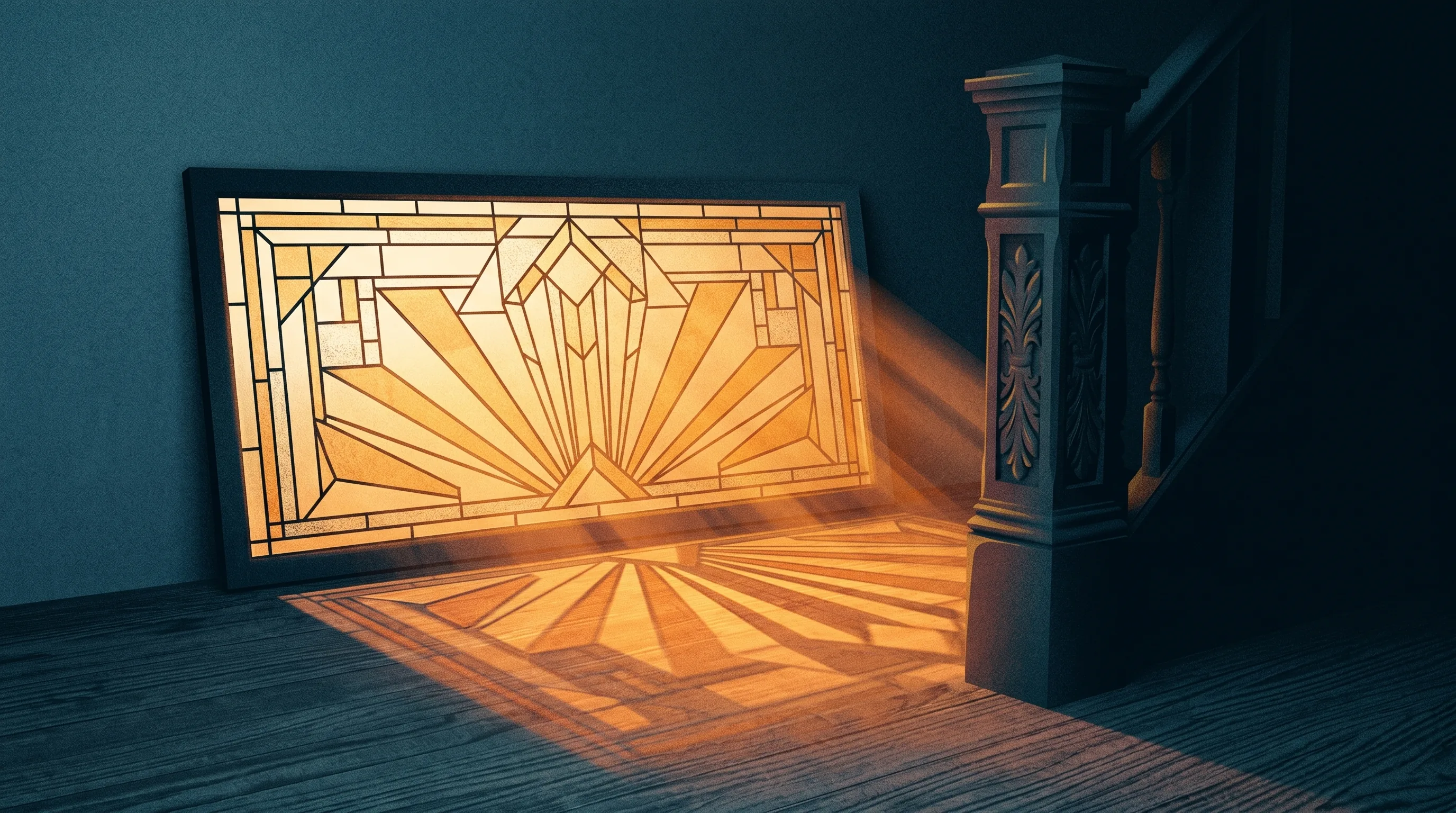
Transom windows, leaded glass panels, and early divided-light sash windows bring natural light and visual complexity to contemporary renovations. Many buyers source these items to replace modern windows in older homes undergoing historically sensitive renovation.
Hardware and Ironwork
Original cast-iron hardware is consistently among the most practical salvage purchases. Door hinges, rim locks, shutter dogs, barn door hardware, and decorative brackets are all available in the salvage market at prices comparable to or below reproduction hardware of far inferior quality.
Structural ironwork, brackets, tie-rod washers, decorative gates, has found a strong market among buyers decorating in the industrial and farmhouse tradition. These pieces display well mounted on walls or incorporated into custom furniture.
Pottery, Tile, and Stone
Salvaged stone, particularly limestone and granite thresholds, sills, and flagging, carries age and weight that quarried new stone cannot match. Reclaimed brick, hand-formed and fired before the introduction of mechanized manufacture, has superior color variation and surface texture to modern brick.
Original encaustic and terracotta tile from Victorian commercial and institutional buildings is increasingly scarce and eagerly sought for kitchen and bath applications.
Sourcing Salvage Responsibly
The ethical dimension of architectural salvage deserves attention. The best salvage comes from materials legally removed from buildings with owner consent, demolition projects, permitted renovations, estate clearances. Salvage taken without authorization, or stripped from protected historic structures, is not only legally problematic but contributes to the destruction of the built heritage that gives this material its value.
When buying from a dealer, ask about the provenance of significant pieces. A reputable dealer will be able to describe, at minimum, the general region and type of structure from which an item was recovered. Specific documentation, a demolition permit number, an estate sale address, a named property, is better still.
Portland has a particularly active salvage community, fed by the ongoing renovation of its Victorian and Craftsman housing stock as well as by regular demolition projects in the wider Pacific Northwest region. Dealers in the city maintain connections with building contractors, estate liquidators, and out-of-state pickers who travel the farm belt and river towns of the Midwest.
Practical Considerations Before You Buy
Salvaged materials require more preparation and care than new materials, and buyers should account for that in their planning.
Structural wood should be inspected for insect damage, rot, and checking before purchase. Minor surface checking is normal and acceptable; deep structural cracks or soft spots indicating rot are not. Beams and planks should be allowed to acclimate to interior conditions before installation to minimize movement.
Original paint on salvaged building elements may contain lead, particularly on pieces manufactured before 1978. Test before sanding or cutting, and follow appropriate safety protocols. Lead paint that is in stable condition and will not be disturbed poses minimal risk; paint that will be sanded or machined requires proper containment and disposal procedures.
Hardware should be cleaned gently with a penetrating oil to free mechanical parts and remove surface corrosion. Avoid wire brushing or abrasive cleaning that would remove original surface patina; the aged finish is part of the value.
Beginning a Salvage Collection
For buyers new to architectural salvage, the most practical starting point is hardware. Small cast-iron and brass hardware pieces are affordable, easy to store, and immediately useful. Building a collection of original hinges, pulls, and locks gives you direct experience reading age, quality, and condition before you commit to larger purchases.
From there, doors and window sash represent a natural next step: meaningful objects with clear functional applications, available across a wide price range.
Structural wood requires more planning, you need a project to receive it, but for buyers with a renovation underway or in prospect, this is where salvage delivers its most dramatic aesthetic returns.